
The BRMEC Colloquia - Twenty Years of Building ME Research
The Biomedical Research into ME Colloquium series began in 2011 with what the charity described at the time as a "Corridor Conference" - an informal gathering of clinicians and researchers during the IIMEC6 conference weekend, discussing ways to collaborate and progress knowledge. Fifteen years on, that idea has grown into one of the most distinctive annual events in international ME research.
The colloquia are unique symposia designed specifically for biomedical researchers working on ME, or able to bring relevant expertise into the field. Unlike larger open conferences, they are focused, invitation-based gatherings - CPD-accredited, and attended by delegates from more than 20 countries. They bring together scientists, clinicians and early-career researchers in an environment that prioritises exchange and collaboration over presentation.
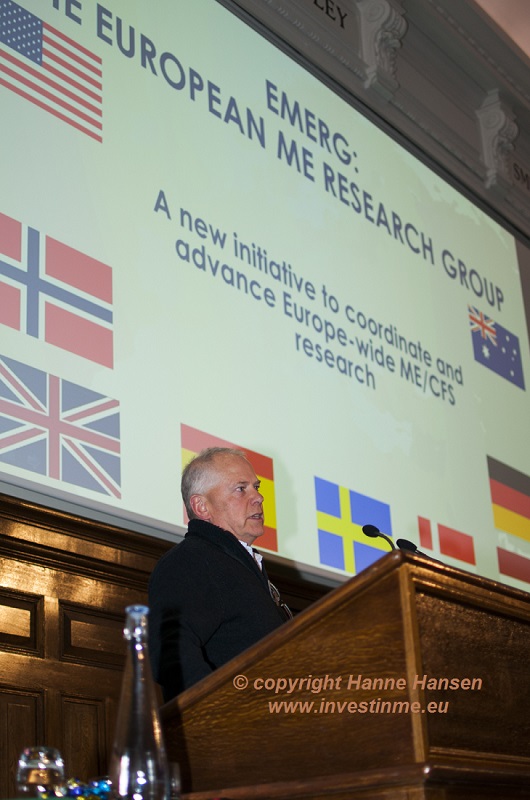
That emphasis on collaboration has had tangible results. The colloquia have been directly instrumental in forming new ME research partnerships across continents, and spawned lasting international structures including the European ME Research Group (EMERG) and its associated early-career researcher network, Young EMERG.
The colloquia have been chaired since 2019 by Professor Simon Carding of the Quadram Institute Bioscience, Norwich Research Park. Professor Carding brings exceptional breadth to the role. His research career has spanned postdoctoral work at New York University School of Medicine and Yale University, where he worked on the molecular genetics of gamma-delta T cells - a field of direct relevance to immune dysfunction in ME - and faculty positions at the University of Pennsylvania, the University of Leeds, and the University of East Anglia.
At the Quadram Institute he leads the Gut Microbes and Health research programme, one of the foremost centres for gut biology and mucosal immunology in Europe. He is co-chair of EMERG, and has been a central figure in building the international research infrastructure around ME.
Over fifteen colloquia the themes have shifted as the field has evolved - from early work on aetiology and autoimmunity, through metabolomics and systems biology, to the emergence of long COVID as both a parallel and a lens. BRMEC15 in 2026 addresses mechanisms and treatment strategies across nine sessions spanning systems biology, post-genomics, chronic infection, neuroinflammation, metabolism, immunology, biomarker discovery and therapeutics.
The ethos has remained constant throughout: no salaries, no institutional inertia, and a single focus on advancing the science that patients with ME need.